
Selecting the Right Plantings for South-Central Montana
A guide to selecting native, drought-resistant shrubs and perennials that survive dry summers and cold winters while staying vibrant.
Most plant failures in south-central Montana are not gardening mistakes. They are shopping mistakes. The plant was chosen for a climate it will never see, and no amount of watering fixes that.
Know your actual conditions, not the average ones
Billings and the surrounding valley sit around USDA hardiness zone 4b to 5a. That number tells you the average coldest winter temperature and nothing else, which is why it is a starting filter rather than an answer.
Three local conditions matter as much as the zone:
- We are semi-arid. Billings averages roughly 14 inches of precipitation a year. Anything sold as preferring consistently moist soil is signing you up for a permanent watering obligation.
- The soil runs heavy and alkaline. Much of the Yellowstone Valley is clay with a high pH. Acid-loving plants will sit there looking progressively worse no matter what you feed them.
- Chinooks break dormancy. A warm wind in February can wake a plant up weeks early, and the next hard freeze kills the new growth. Plants that hold dormancy reliably do better here than plants rated for the same low temperature elsewhere.
Match the plant to the spot, not the yard
A single property can hold several different growing conditions. The south side of a house against brick is dramatically hotter and drier than the north side. A bed at the bottom of a slope collects water the top of the slope never sees. A strip along a driveway takes road salt all winter.
Walk your property at different times of day before you buy anything. Note where snow piles up, where water stands after a storm, and where the wind hits hardest. Those observations will eliminate more bad choices than any plant tag.
Build the planting in layers
Landscapes that look good year-round are built in layers, and each layer does a different job.
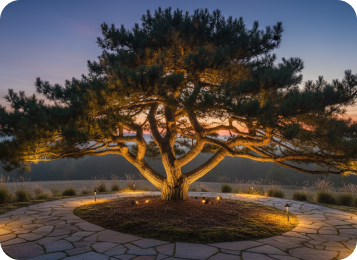
- Trees set the structure and take the longest to pay off. Choose these first and give them room for their mature size, not their nursery size.
- Shrubs carry the winter. In a climate with six months of dormancy, evergreens and plants with interesting bark or persistent berries are doing most of the visual work half the year.
- Perennials and grasses supply the seasonal change. Native and adapted grasses in particular handle wind and drought well and hold their shape into winter.
A common mistake is loading up on perennials because they look best at the garden center in June, then discovering the yard has nothing to offer from October to April.
Give new plants a real establishment period
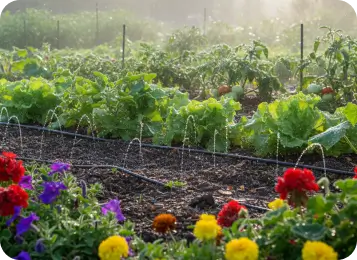
Drought tolerant does not mean drought tolerant on day one. Nearly every tough, low-water plant needs consistent water through its first season or two while it builds a root system. After that it can fend for itself. Skipping that window is how people conclude that a perfectly appropriate plant “does not grow here.”
Timing helps too. Planting in spring or early fall gives roots a chance to establish before the plant faces either deep summer heat or hard winter cold.
Where design earns its keep
Plant selection looks like a list problem and is actually a systems problem. What goes where depends on grading, drainage, irrigation zones, mature size, and how you use the space. Get those right and maintenance drops for the life of the landscape. Get them wrong and you spend a decade compensating.
If you would rather not learn this by trial and error, our tree and shrub planting in Billings, MT starts from your site’s actual conditions, and a full landscape design coordinates plant choice with irrigation so the two are not working against each other. Request a free consultation to talk it through.