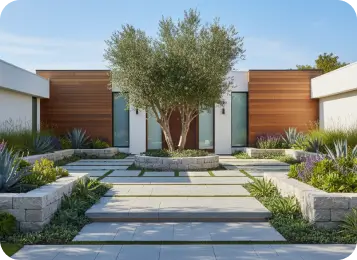
Reimagining Your Outdoor Living Space: Trends for 2026
Discover how modern homeowners are blending indoor comfort with outdoor durability through integrated fire features and custom stone patios.
Outdoor living trends are mostly noise. Every year brings a new must-have feature, and most of them are gone in three. What follows is the small set of shifts that have held up, judged by whether people actually use the space afterward.
Fewer, larger, better-defined spaces
The scattered approach, a small patio here, a fire pit there, a bench somewhere else, has given way to one or two properly sized outdoor rooms. A patio big enough to hold a table and a seating area without people squeezing past each other gets used constantly. Three undersized zones get used rarely.
The practical test is furniture. Lay out the actual pieces you intend to use, allow real walking room behind pulled-out chairs, and size the hardscape to that. Most patios that disappoint were sized by eye.
Designing for a short season
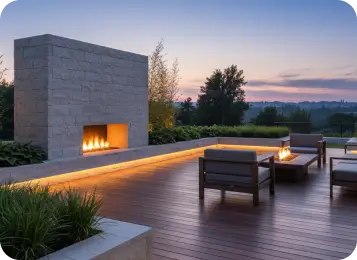
In south-central Montana the outdoor season is not long, which puts a premium on anything that extends it. Fire features are the obvious example and they have stopped being a novelty. A fire pit or fireplace adds usable weeks at both ends of the year.
Wind shelter matters just as much and gets considered far less. A patio on an exposed site can be unusable on an otherwise pleasant evening. Walls, structures, and well-placed planting can make the difference between a space you enjoy and one you look at.
Built-in over bought
Seat walls, built-in benches and integrated planters are replacing an accumulation of furniture. They do not blow over, they do not need storing in October, they do not fade, and they make a space feel designed rather than furnished.
A seat wall capped at a comfortable sitting height doubles as a retaining wall, a boundary and extra seating for a crowd. That is three jobs from one structure, which is usually how you can tell a good landscaping decision from a fashionable one.
Lower-maintenance planting, not no-maintenance
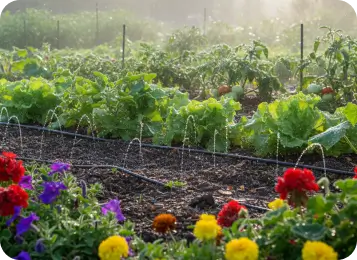
The shift toward native and adapted plants has less to do with aesthetics than with the fact that they survive. Plants suited to a semi-arid climate with alkaline soil need less water, less intervention and less replacement.
Worth saying plainly: low maintenance is not no maintenance, and rock mulch over fabric is not a landscape. It heats the soil, it collects debris and weeds anyway, and it makes future changes miserable.
Lighting treated as part of the design
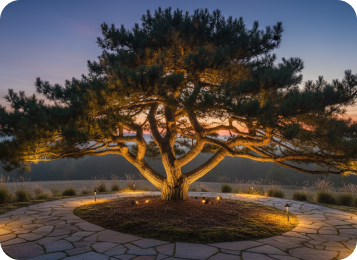
Lighting has moved from an afterthought to something planned with the hardscape, partly because so much of the year you are viewing the yard from inside the house after dark. Conduit and fixture locations designed in at the patio and wall stage cost very little. Retrofitting them later costs a great deal.
Building in phases, deliberately
More homeowners are commissioning a full master plan and then building it over several seasons. This is the most useful trend on the list. A plan means phase one does not have to be torn out to make room for phase three, and utilities, drainage and grading get solved once for the whole property.
The alternative, adding one project at a time with no plan, is how yards end up with a patio in the wrong place and a slope nobody wants to deal with.
If you are thinking about an outdoor living space in Billings, MT, the sequence that works is a landscape design first, then construction of a paver patio and whatever else the plan calls for. Request a free consultation to get started.